
Login
Search
Lexicon
Children's Flowers






















Who is online
We have 20 guests and no members online
Latest Blogs

Latest Comments
Pomegranate - The Woman


- Details
- Category: Archetypes
- Hits: 757
Pomegranate - Punica granatum
According to Gertrude Jobes‘ ‚Dictionary of Mythology, folklore and symbol‘, which came out 1962 in New York, the Pomegranate has a certain meaning for all those born on the 10th of June. Should any of you readers be born that very day this article could be of special interest to you and may bring new insights into the essence of your own life.
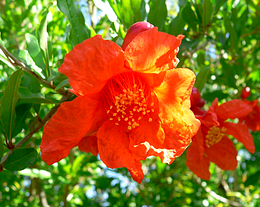
Let us take a closer look at the plant first. Orginally the pomegranate tree came from western Asia. Today it is a very common plant around the Mediterranean. The tree can grow up to severel meters. He has been cultivated as a fruit as well as ornamental tree, but can also been found in hedges and on wasteland. His leaves reminds one of leather, they are rough and opposite. The fiery red blossoms are 3 to 4 cm in diameter and appear at the the branches‘ ends. They flower from May to August. The fruits are as big as oranges and are somewhat sourish.
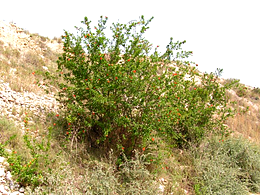
In 1933 the German scientists Adolf Butenandt and H. Jacobi succeeded in isolating female hormones from the fruits. This explains some ancient applications, of which I would like to report here:
In ancient Egypt they prepared vaginal suppositories of crushed pomegranate pips with some wax and used them as contraceptives. The contained estrogen in fact could possibly prevent the ovulation. Greek physicians however used the fruits more physically than chemically, they prescribed hollowed half fruits for the same purpose. They were used as caps for the uterus.
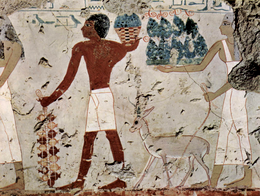
Illustration from the grave of Amenemhet, carrier of pomegranates
From England comes a recipe using nutmeg, cinnamon and further spices in a syrup made from pomegranates, which has the effect of soothing nausea during the first months of the pregnancy.

Eating pomegranates is recommended in cases of oedema, a physical phenomenon which often arises during pregnancies.
Besides the mentioned there are many more applications known, e.g. the use of the tree‘s bark and roots in cases of intestinal worms. So much for the medical indications and applications.
- Prev
- Next >>